Whistles “whistle” because the air you blow into them is directed against a sharp edge. A fipple is the part of the whistle that shapes the air into a smoothly flowing stream and directs it against that sharp edge. When this works, you get a nice clear sound. When it does not work, you get a muddy and/or hiss-y sound….
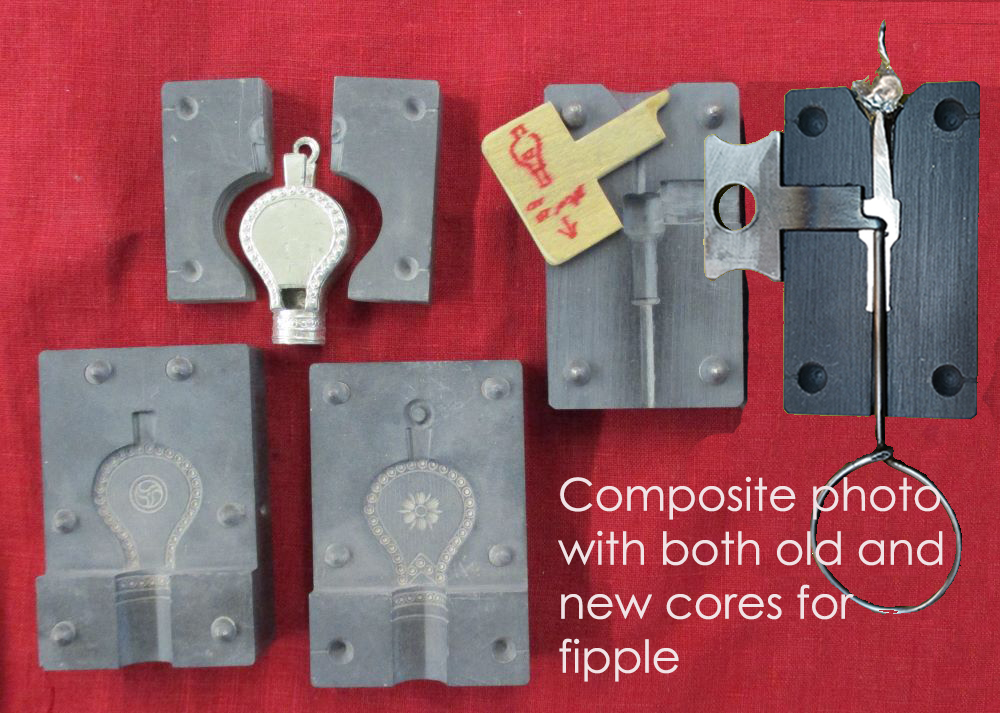
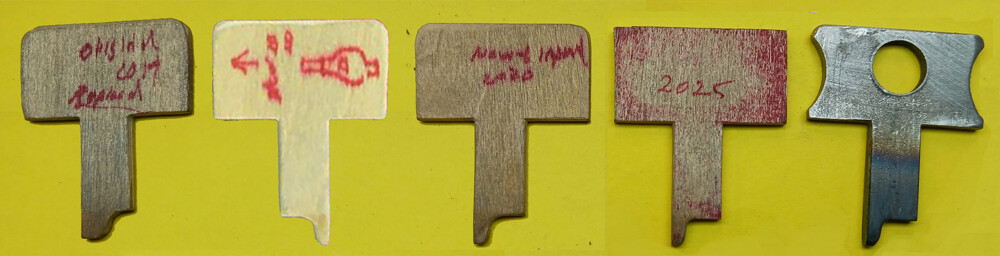
…which was happening with our otherwise excellent Bellows Whistle. This is a complex item made in tin with two separate molds. The outer part is slush cast (we fill up the entire mold with tin, let it cool enough that the outside solidifies into a shell, and pour out the still molten tin inside). The fipple is cast in a separate mold. It has a wire core to make the tube you blow into, and a second core to shape the airway.
As the metal cools it shrinks – and in this case the tin poured into the fipple mold shrank and created a rough-walled, hollowed out, sloppy airway that did not retain the shape of the core. This made the whistle sound weak and hiss-y. Mac made a core, then a replacement core, trying to solve the problem when we introduced the whistle. The next time he cast it he made a third. When he started casting it most recently, he made a fourth. Although there was some improvement, the airflow was still turbulent.
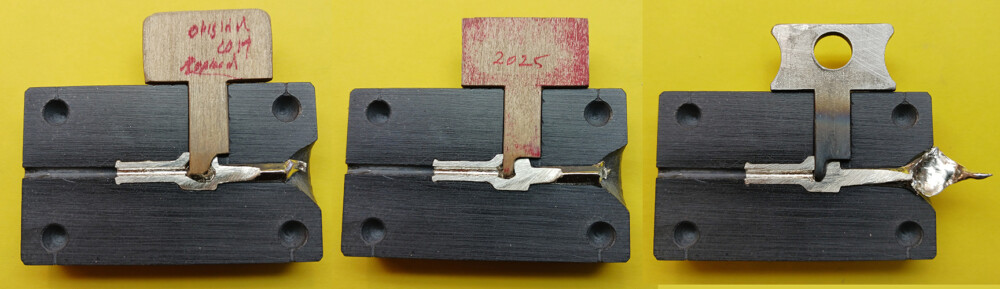
Because the problem was caused by the metal shrinking away from the wooden cores, on his fifth attempt Mac introduced a “chill” to affect the cooling pattern by making the mold from steel. This pulls heat out of the tin faster than the stone mold does, so the metal solidifies around it, retaining the shape of the mold. We need indentations in the steel core to pull it out of the mold, because the cast piece is so much tighter.
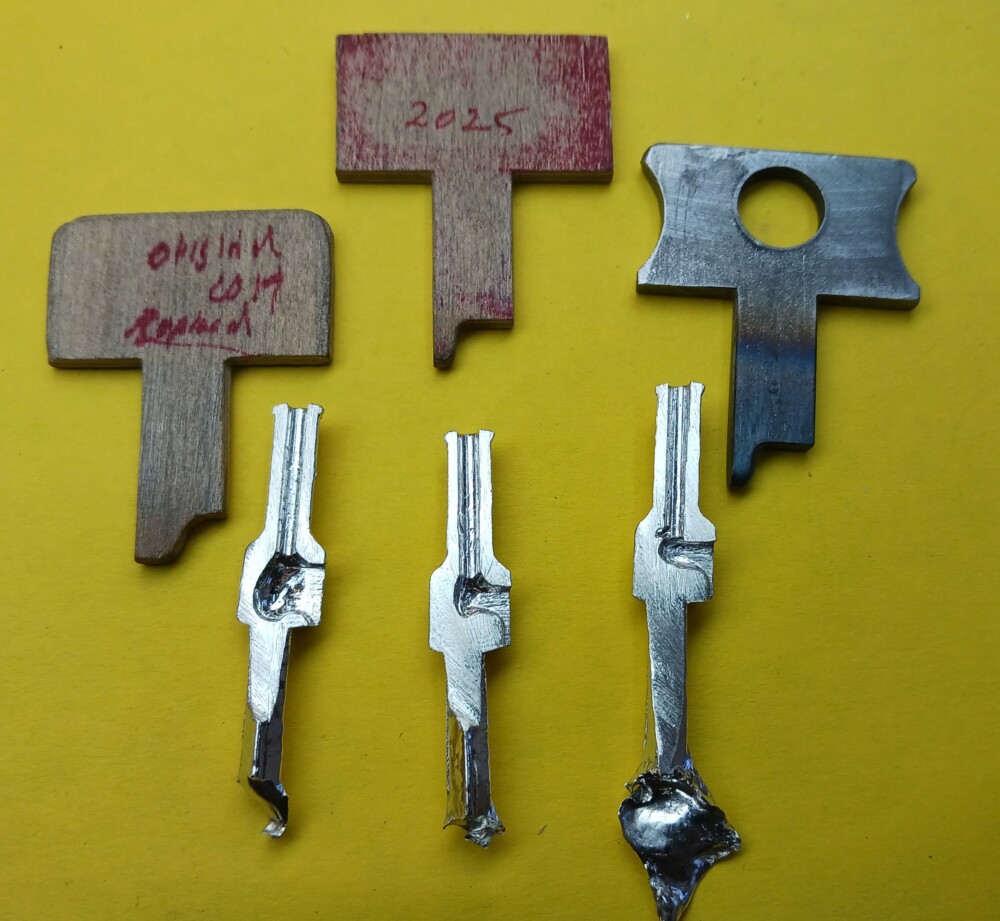
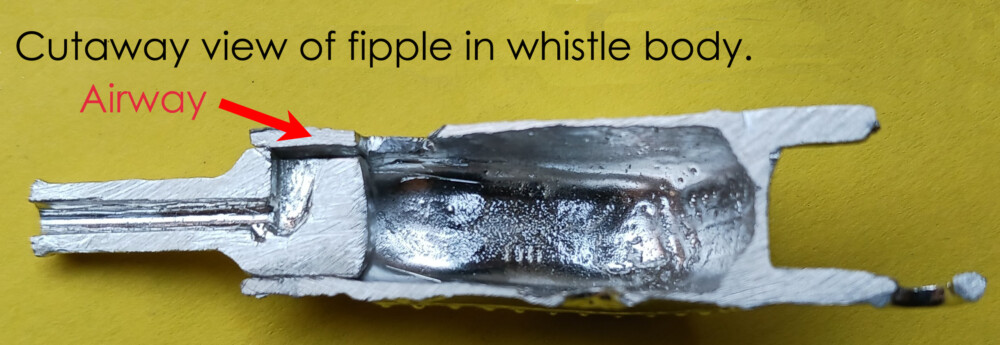
When the new fipple is inserted and soldered into the body of the whistle, the airway is much cleaner – and the sound is better.
Mac doesn’t have any additional ideas about making a better fipple right now, but he may – next time.